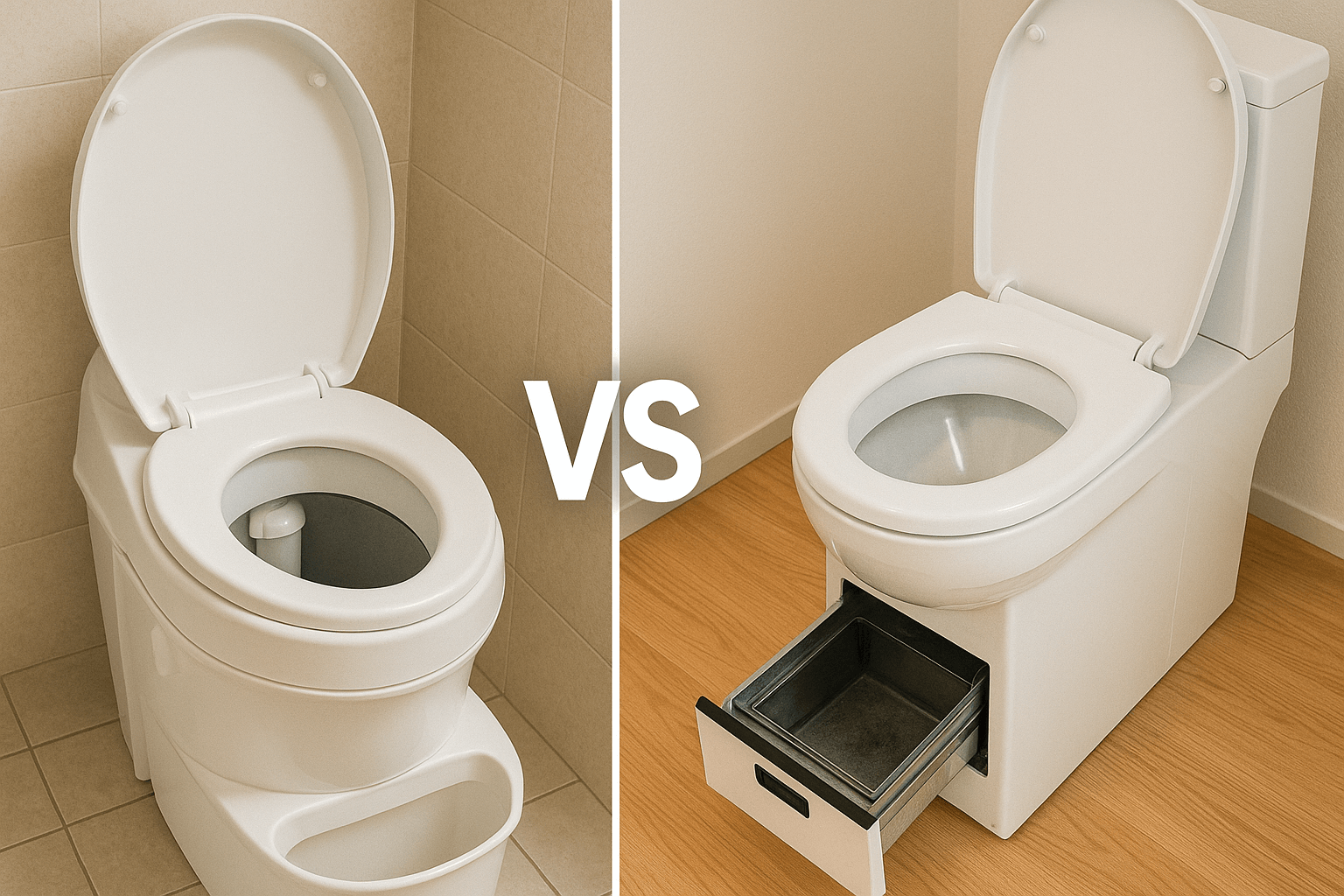
Composting Toilet Vs Incinerating Toilet: Which Is Better?
Many people feel overwhelmed when it comes to choosing a toilet for off-grid homes, cabins, or RVs. Regular toilets need plumbing, water, and septic systems. But what do you do when you don’t have any of those? You might have heard about composting toilets and incinerating toilets—but which one is right for you? Both promise to solve your bathroom problem, but they work in very different ways. Making a mistake can cost you time, money, and a lot of frustration. Let’s break down the differences, benefits, and downsides, so you can make the best choice for your needs.
What Is A Composting Toilet?
A composting toilet is a waterless toilet system. It breaks down human waste using natural bacteria and airflow. The result is compost you can use for non-edible plants.
These toilets use:
- No water (or very little)
- No sewer or septic connection
- Simple technology
You add a carbon material, like sawdust or coconut coir, after each use. The system uses air and time to turn waste into compost.
Some models need electricity for a fan. Others are fully manual. The process is similar to garden composting, just in a controlled way.
How Does An Incinerating Toilet Work?
An incinerating toilet burns waste at high heat. It reduces everything to a small amount of sterile ash. Most models use electricity, gas, or sometimes propane.
You use the toilet as normal, press a button, and the system starts. After 30–60 minutes, you remove the ash. There is no compost, no water, and no odor if used correctly.
These toilets are fully self-contained. All you need is a power or gas source.
Credit: www.littlehousesforsale.com
Head-to-head: Composting Toilet Vs Incinerating Toilet
Let’s look at the real-world differences that matter most to users.
How They Manage Waste
- Composting toilets: Use natural decomposition. Waste becomes compost.
- Incinerating toilets: Use high heat. Waste becomes ash.
Power Needs
- Composting: Some models need a fan (low power). Others need no power at all.
- Incinerating: Almost always need lots of power (electricity or gas). Not ideal for solar setups with limited energy.
Water Usage
- Composting: Uses no water at all.
- Incinerating: Also uses no water.
Odor Control
- Composting: Needs good airflow and the right balance of materials. If set up right, odor is minimal.
- Incinerating: No odor after burning, but you may notice a smell during the burn cycle (especially with poor venting).
Maintenance
- Composting: Remove compost every few weeks or months, depending on use. Clean the chamber and add carbon material.
- Incinerating: Remove ash after every 20–40 uses. Clean the bowl and check for clogs.
Cost
- Composting: $500–$2,000 for most quality models.
- Incinerating: $1,800–$4,000. Running costs are higher due to energy use.
Installation
- Composting: Simple. Needs venting, sometimes a small drain.
- Incinerating: Needs strong venting and a safe power/gas supply.
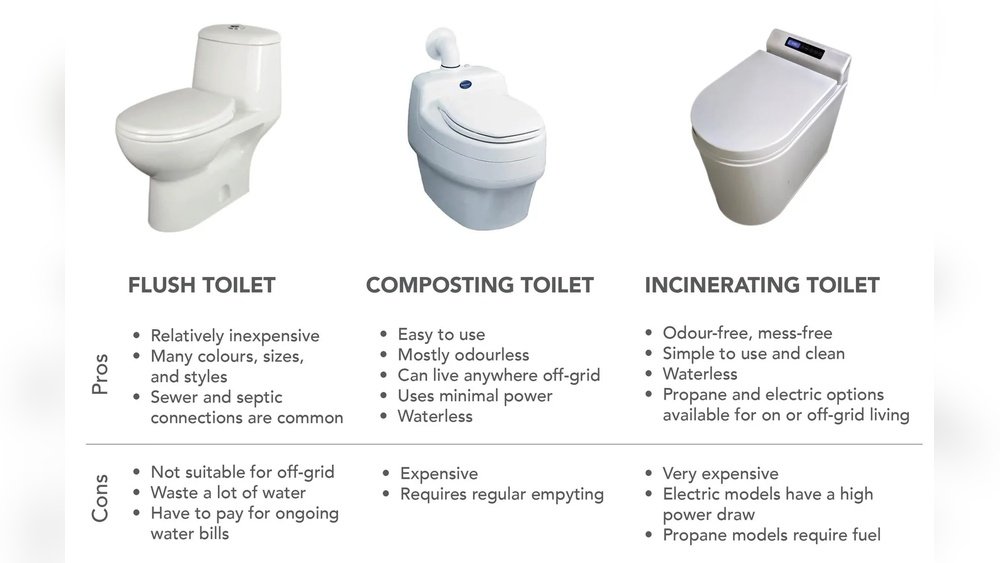
Here’s a quick look at these differences:
| Feature | Composting Toilet | Incinerating Toilet |
|---|---|---|
| Waste Output | Compost | Ash |
| Power Needs | Low/None | High |
| Water Use | None | None |
| Odor | Low (if maintained) | Low (after burn) |
| Maintenance | Compost removal | Ash removal |
| Purchase Cost | Lower | Higher |
Pros And Cons
Composting Toilet Pros
- Eco-friendly: Turns waste into useful compost.
- Low energy: Some models need no power.
- Cheap to run: No water or sewer bills.
- Simple to install: Great for cabins, tiny houses, or boats.
Composting Toilet Cons
- Needs user effort: Add material, check airflow, empty compost.
- Learning curve: Takes time to get it right.
- Not for all climates: Extreme cold can slow composting.
- Compost use rules: Not all places allow use of composted human waste.
Incinerating Toilet Pros
- Very clean: Waste gone in minutes, only ash remains.
- No compost to handle: Simple ash removal.
- Works anywhere: No need for soil or composting space.
- Odor-free after use: If vented well.
Incinerating Toilet Cons
- High power use: Needs lots of energy.
- Expensive: Both to buy and to run.
- Not silent: The burn cycle can be loud.
- Hot surfaces: Can be a hazard for kids or pets.
When To Choose A Composting Toilet
Choose a composting toilet if:
- You want to live off-grid with little energy use.
- You value eco-friendly solutions.
- You have access to sawdust, coir, or other carbon material.
- You don’t mind a little hands-on maintenance.
- You want to save money.
It’s a good fit for:
- Tiny homes
- Boats
- Off-grid cabins
- RVs (with ventilation)
But it’s not perfect for:
- Busy homes with many users (more maintenance)
- Very cold places (composting slows down)
When To Choose An Incinerating Toilet
Choose an incinerating toilet if:
- You have steady access to power or gas.
- You want the cleanest, simplest waste removal.
- You don’t want to handle compost.
- You live where composting isn’t allowed.
- You want a high-end, “flush and forget” feel.
It’s a strong choice for:
- Urban tiny homes with no plumbing
- Remote job sites
- Winter cabins (no composting issues)
But it may not work if:
- Your power supply is limited
- You’re on a tight budget

Credit: dry-flush.com
Practical Insights Most People Miss
Many beginners think all non-flush toilets are the same. That’s not true. Here are some things you might not realize:
- Composting toilets need good airflow. If your vent gets blocked, odor and mess will follow. Check your vent monthly.
- Incinerating toilets can trip power systems. They draw a lot of current, often more than small solar setups can handle.
- Moisture matters: Too much liquid in a composting toilet can lead to flies or bad smells. Use bulking material after every use.
- Ash from incinerators is not compost. You can toss it in the trash, but don’t use it for gardens.
- You need to check local rules. Some places don’t allow human compost, even if well processed.
Environmental Impact
Composting toilets are often seen as the greenest choice. They recycle nutrients and reduce water waste. For example, a family using a composting toilet can save over 6,000 gallons of water per year.
Incinerating toilets use a lot of energy. Each cycle can use 1–2 kWh (for electric models). Over a year, this adds up. The ash is sterile and easy to dispose of, but the process is not as eco-friendly.
Here’s a look at the environmental effects:
| Factor | Composting Toilet | Incinerating Toilet |
|---|---|---|
| Water Saved (yearly) | 6,000+ gallons | 6,000+ gallons |
| Energy Use (per cycle) | 0–0.05 kWh | 1–2 kWh |
| End Product | Compost | Sterile ash |
| CO2 Emissions | Low | Higher (if electric) |
Real-world Examples
- Nature’s Head Composting Toilet is a favorite in tiny homes and boats. Users love its low power needs and easy setup.
- Incinolet is a common electric incinerating toilet. It’s often used in remote job sites or cabins with strong electrical systems.
One user shared that with a composting toilet, they only empty the bin every six weeks (family of two). But with an incinerating toilet, they had to check the ash tray every week, and their power bill increased.
Installation And Upkeep
Composting toilets usually need:
- A vent pipe (to outdoors)
- A small space
- Regular addition of carbon material
Incinerating toilets need:
- A strong vent pipe (to handle smoke/heat)
- Reliable power or gas
- Safe clearance for hot parts
Both types need you to check and clean them. But composting toilets ask for more hands-on effort.
Safety Considerations
- Incinerating toilets get hot. Teach kids and guests not to touch during or right after use.
- Composting toilets can attract flies if not managed right. Keep the mix dry and airy.
Cost Breakdown
Composting toilets are cheaper to buy and run. Here’s a typical breakdown:
- Composting toilet: $1,000 (purchase) + $30/year (materials)
- Incinerating toilet: $2,500 (purchase) + $300/year (electricity or gas)
Some high-end incinerating models cost even more.
Common Mistakes To Avoid
- Ignoring venting instructions: Both types must vent outdoors.
- Overloading the system: Too many users can overwhelm a small unit.
- Skipping regular cleaning: Leads to odor and breakdowns.
- Not checking local laws: Some places ban composting toilets or require permits.
- Using the wrong material: Only use recommended bulking agents in composting toilets.
User Experience
Most composting toilet users say it takes a few weeks to adjust. Once you have the right rhythm, maintenance is easy and odor-free. Incinerating toilet users enjoy the “set it and forget it” feel, but often mention high running costs and the need for strong power.
Which One Is Right For You?
- Choose a composting toilet if you want green living, low cost, and can do light maintenance.
- Choose an incinerating toilet if you want zero compost handling and have reliable power.
There’s no single best answer. Think about your location, budget, power supply, and comfort with maintenance.
For a deeper look at eco-friendly toilets, you can read about the science of composting on Wikipedia.
Frequently Asked Questions
How Often Do You Empty A Composting Toilet?
Most composting toilets need emptying every 2–6 weeks for a family. The exact time depends on use and model. For single users, it can be every couple of months.
Does An Incinerating Toilet Smell?
No, not after the burn. During the burn cycle, some odor is possible if venting is poor. Good venting keeps your space odor-free.
Can You Use Compost From A Composting Toilet In Your Garden?
It depends on local rules. Most places say you can use it for non-food plants and landscaping. Never use it on vegetables or fruits unless fully processed and allowed by law.
Are Incinerating Toilets Safe To Use Indoors?
Yes, if installed correctly. You must follow the manufacturer’s venting and safety rules. Surfaces can get hot, so be careful with children.
Which Toilet Is Better For The Environment?
Composting toilets use less energy and return nutrients to the soil. Incinerating toilets use more power and create ash. Composting is usually greener, but it depends on how you use and maintain the system.

Credit: wildoaktrail.com